


In the aggregates industry, downtime used to be treated as a maintenance problem. Something broke, maintenance fixed it, production resumed. That model doesn’t work anymore.
Today, crusher uptime has become a direct profit driver. Every hour of lost production impacts revenue, labor efficiency, downstream scheduling, and customer commitments. The most successful operations aren’t just maintaining equipment—they’re actively managing uptime as a strategic asset.
This shift is changing how plants operate, how service teams are deployed, and how companies evaluate equipment performance.
Uptime Isn’t Just “Keeping Machines Running” Anymore
For years, uptime meant reacting quickly when something failed. But modern crushing operations are running tighter schedules, higher throughput targets, and leaner crews.
That changes everything.
Now, uptime includes:
- Predictive maintenance planning
- Wear part lifecycle optimization
- Real-time equipment monitoring
- Strategic rebuild scheduling
- Field service responsiveness
- Inventory planning for critical components
When any one of these areas falls short, production slows or stops—and the financial impact compounds quickly.
A single hour of crusher downtime can ripple through the entire operation, delaying hauling, screening, and stockpile availability.
The Real Cost of Downtime: It’s Bigger Than Lost Production
Most operations underestimate downtime because they only calculate lost tons. The real cost is broader.
Downtime affects:
- Lost production revenue (tons not processed)
- Idle labor costs (crew standing by)
- Fuel inefficiency (equipment cycles without output)
- Contract penalties (missed delivery commitments)
- Wear imbalance (upstream/downstream bottlenecks)
- Customer trust and scheduling reliability
Even more importantly, unplanned downtime often forces rushed repairs, which can shorten component life and create a cycle of repeat failures.
This is where uptime becomes a strategy instead of a reaction.
Crusher Uptime Strategy: The New Competitive Advantage
A modern crusher uptime strategy focuses on preventing interruptions before they happen—not just responding faster when they do.
Leading producers are shifting to three core pillars:
1. Predictive Maintenance Instead of Reactive Repairs
Instead of waiting for failure, operations are tracking:
- Bearing temperature trends
- Hydraulic pressure fluctuations
- Vibration patterns
- Liner wear progression
- Throughput changes over time
These signals allow teams to intervene before failure occurs, scheduling maintenance during planned downtime instead of production hours.
2. Wear Part Optimization and Lifecycle Management
Not all wear parts are created equal, and not all applications behave the same way.
Improper liner selection or ignoring wear profiles can lead to:
- Reduced throughput
- Increased power consumption
- Uneven wear patterns
- Premature failures
Smart operations treat wear parts as performance tools, not just consumables. Matching liners and components to material and feed conditions is one of the fastest ways to improve uptime without buying new equipment.
3. Planned Rebuild Cycles Instead of Emergency Overhauls
Rebuild timing is often the difference between controlled cost and catastrophic downtime.
A planned rebuild:
- Reduces unexpected failure risk
- Stabilizes production schedules
- Extends machine life significantly
- Allows parts and labor to be staged in advance
Emergency rebuilds, by contrast, are expensive, disruptive, and often incomplete due to time pressure.
Field Service Speed Is Now a Production Factor
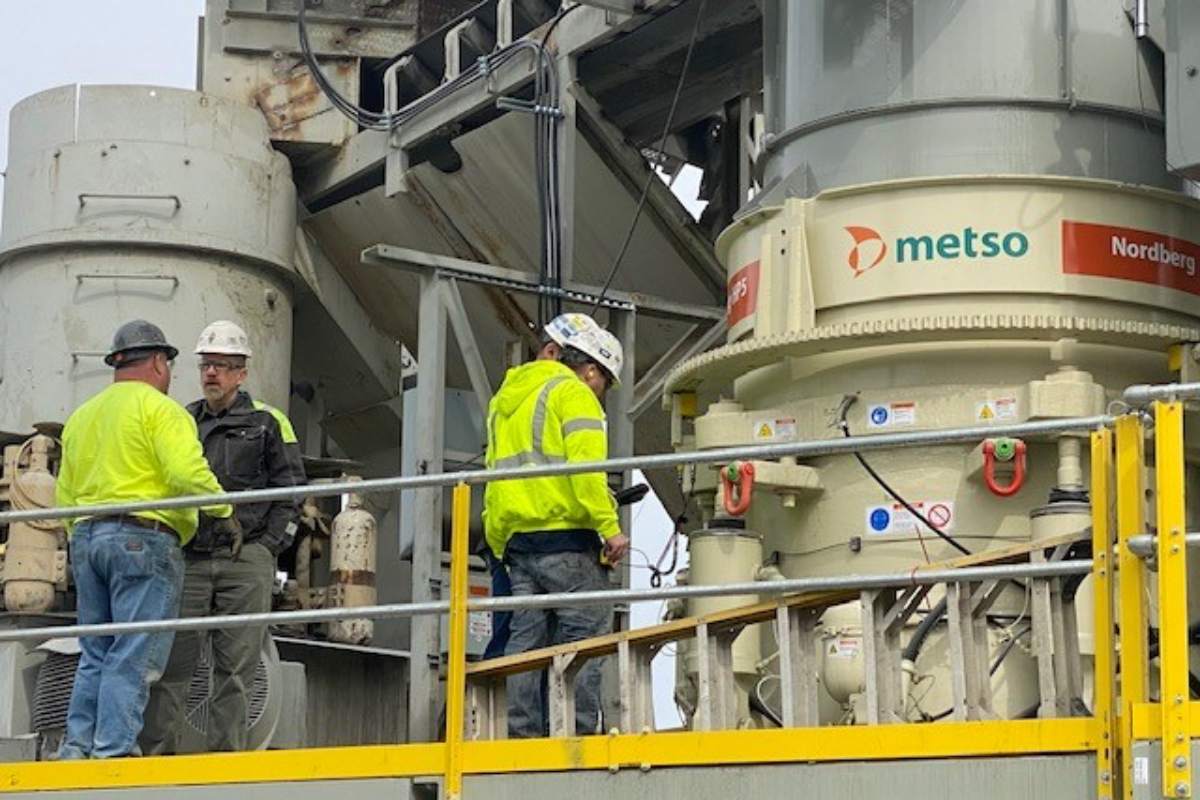 One of the biggest shifts in the industry is how field service is viewed.
It’s no longer just “repair support”—it’s production insurance.
Fast access to experienced technicians can mean the difference between:
- A 4-hour fix vs. a 4-day shutdown
- A controlled liner change vs. secondary damage
- A planned outage vs. lost customer commitments
At organizations like Mellott, field service isn’t treated as an afterthought—it’s integrated into uptime strategy planning. Learn more about service capabilities and support infrastructure here:
Mellott Company
Data Is Quietly Reshaping Crusher Performance
 Even in traditional aggregates operations, data is becoming a key driver of uptime.
Plants are increasingly tracking:
- Tons per hour consistency
- Fuel and power usage per ton
- Maintenance frequency by component
- Wear rate per material type
- Downtime causes categorized by system
This data reveals patterns that were previously invisible—like recurring liner issues tied to feed variability or unexpected bearing wear tied to operating temperature swings.
Once these patterns are identified, uptime stops being reactive and becomes engineered.
The Hidden Advantage: Standardization Across Fleets
Another emerging strategy is equipment standardization.
Operations that run mixed fleets often struggle with:
- Different parts inventories
- Inconsistent maintenance procedures
- Varied training requirements
- Slower troubleshooting times
Standardizing crushers and key components reduces complexity and increases uptime because crews can respond faster and more confidently.
Why Uptime Is Now a Financial Strategy, Not a Maintenance Task
The most important shift happening in the industry is mindset.
Uptime is no longer about fixing machines faster. It’s about designing operations so machines fail less often in the first place.
That requires coordination between:
- Maintenance teams
- Operations leadership
- Parts and inventory planning
- Field service providers
- Equipment suppliers
When all of these align, uptime becomes predictable—and predictability drives profitability.
Final Thought
Crusher uptime is no longer a background maintenance metric. It is now a core performance indicator tied directly to profitability, efficiency, and customer reliability.
Operations that treat uptime strategically gain a measurable advantage: lower cost per ton, more consistent output, and fewer production disruptions.
The question is no longer “How do we fix downtime faster?”
It’s “How do we design downtime out of the system entirely?”
Reach out to our experts here at Mellott and let us help take your operation to new heights! Contact us!
