


When an aggregate plant struggles to meet production targets, the crusher can be an easy place to focus attention. After all, crushing equipment plays a central role in reducing material and determining how it moves through subsequent stages of the process.
But lower-than-expected production does not necessarily mean the crusher itself is the problem.
A crushing and screening plant operates as an interconnected system. Feeders, crushers, screens, conveyors and recirculating material all affect the performance of the overall circuit. If one part of that system cannot keep pace with the others, it can restrict production even when the crusher has additional capacity available.
Finding the true bottleneck in a crushing circuit requires looking beyond individual machines and evaluating how material moves through the entire process.
What Is a Bottleneck in a Crushing Circuit?
A bottleneck is a point in the process that limits the capacity or performance of the overall crushing circuit.
For example, a crusher may be capable of processing more tons per hour, but increasing its output provides little benefit if the downstream screen cannot efficiently handle the additional material. Likewise, an adequately sized crusher and screen cannot reach their potential if a feeder or conveyor restricts material flow.
This is why evaluating individual equipment capacities alone does not provide a complete picture of plant performance. The components of a crushing circuit need to work together at production rates appropriate for the application.
Start With Actual Plant Data
Before changing crusher settings or investing in additional equipment, establish what is actually happening throughout the circuit.
Material sampling and production measurements can help identify where performance begins to deviate from expectations. Depending on the plant, useful information may include:
- Tons per hour at key points in the circuit
- Feed and product gradations
- Crusher feed and discharge gradations
- Screen feed and product gradations
- Oversize material returning through a closed circuit
- Equipment power draw and operating conditions
- Changes in production as feed characteristics vary
Strategic belt sampling and gradation analysis at different locations can provide valuable insight into crusher and screening performance. Rather than assuming which machine is limiting production, plant data allows operators to follow the material through the circuit and identify where capacity or efficiency is being lost.
Evaluate the Feed Before Blaming the Crusher
Consistent crusher performance starts with appropriate feed conditions.
Feed rate, gradation and distribution can all influence how effectively a crusher operates. Depending on the crusher type and application, segregated or inconsistent feed can prevent the crushing chamber from operating as intended.
Cone crushers, in particular, generally perform best when supplied with a consistent, properly distributed feed and operated according to the manufacturer’s recommended conditions.
It is also important to look upstream. If the feeder cannot consistently supply the required amount of material, increasing crusher capacity will not solve the production problem. Conversely, excessive or poorly controlled feed can overload downstream portions of the circuit.
Understanding what is entering the crusher is therefore an important part of determining whether the crusher is truly responsible for reduced plant performance.
Don’t Overlook Screening Capacity and Efficiency
Screens have a significant influence on the performance of a closed crushing circuit.
Their job is not simply to separate finished products. In a closed circuit, the screen also determines which material leaves the process at the desired size and which material is returned for additional crushing.
If screening efficiency declines, material that should have passed through the screen may remain with the oversize fraction and return to the crusher. That unnecessary recirculation adds load to the crusher, screen and conveying equipment without representing new feed entering the plant.
Screening problems can result from several factors, including excessive bed depth, uneven feed distribution, inappropriate screen media, pegging, blinding or a screen that is not adequately sized for the application.
A crusher operating under a heavy circulating load may appear to be the limiting piece of equipment when the underlying issue is actually occurring at the screen.
Check the Conveyors and Transfer Points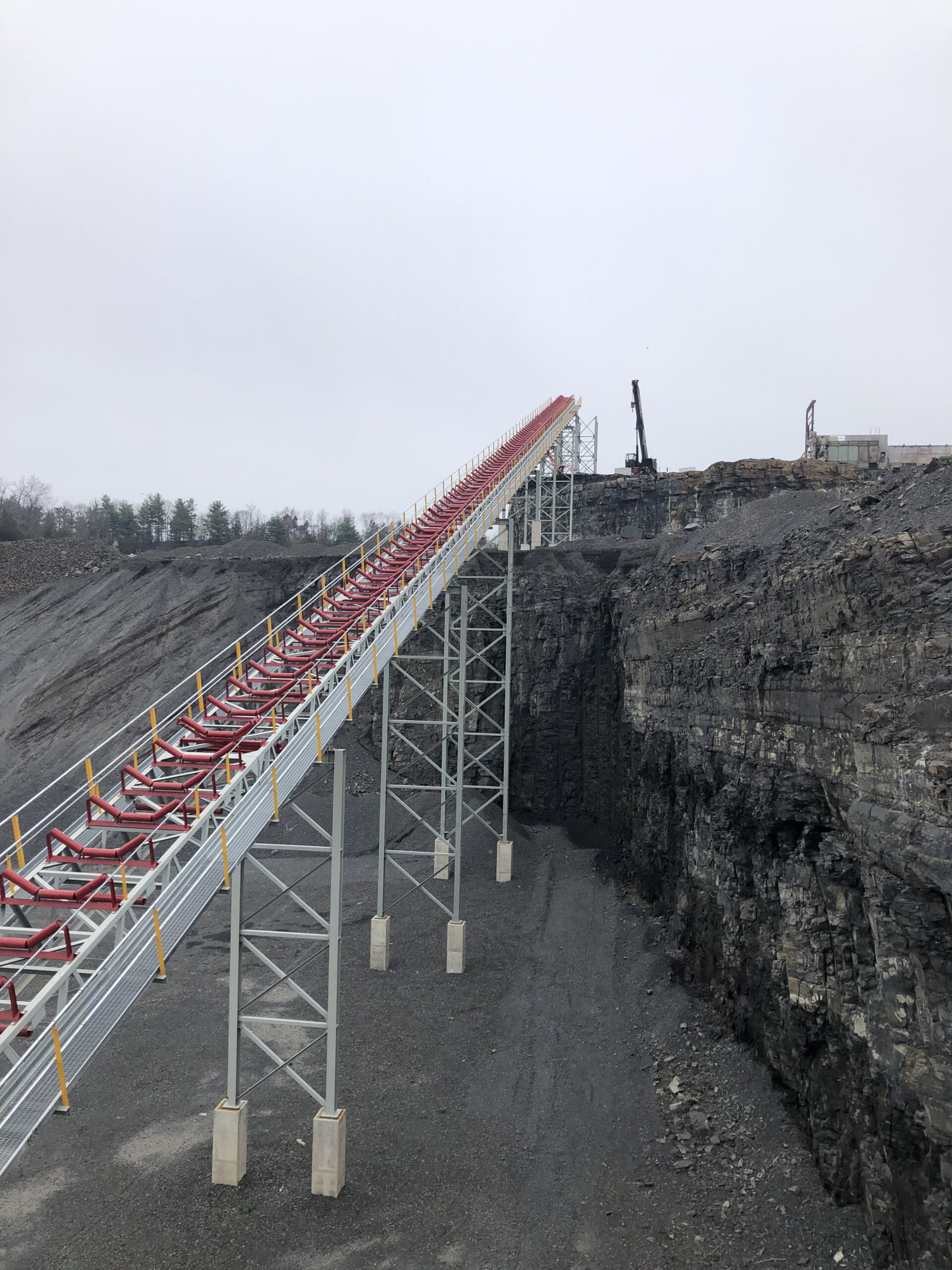
Every ton processed by a crusher eventually has to move somewhere else.
Conveyors and transfer points therefore need to be included in any crushing circuit bottleneck analysis. A conveyor that cannot accommodate the required production rate can restrict the entire system regardless of the capacity available at the crusher.
Material flow through chutes and transfer points matters as well. Restrictions, buildup or poor material distribution can interfere with consistent flow between stages of the plant.
This is another reason increasing the capacity of a single machine does not automatically increase total plant production. Additional crusher throughput is only useful when downstream equipment can transport, classify and process that material.
Understand the Impact of Recirculating Load
Closed-circuit crushing intentionally returns oversize material for additional size reduction. Some recirculation is therefore a normal part of the process.
The concern is whether the amount of material circulating through the circuit is appropriate for the plant design and operating conditions.
Excessive circulating load consumes available capacity because the equipment repeatedly processes material already introduced into the circuit. Screen performance, crusher product gradation, crusher settings and the characteristics of the feed can all influence how much material is returned.
Measuring the return stream and comparing gradations at different points in the circuit can help determine whether recirculating material is contributing to a production bottleneck.
Look at the Entire Crushing and Screening Circuit
One of the most important principles of plant optimization is that changes to one piece of equipment can affect everything around it.
Opening or tightening a crusher setting, changing screen media, increasing feed rate or installing a higher-capacity crusher can alter loads elsewhere in the circuit. A change that improves the performance of one machine may simply move the bottleneck downstream.
For that reason, plant performance should be evaluated as a system.
The objective is not necessarily to operate every individual machine at its maximum possible capacity. Instead, crushers, screens, feeders and conveyors should be appropriately balanced to achieve the required production rate and product specifications reliably.
When Is It Time for a Crushing Plant Evaluation?
If production has gradually declined, a plant consistently falls short of its target throughput, or one piece of equipment repeatedly appears overloaded while others have available capacity, a more detailed circuit evaluation may be worthwhile.
It can also be valuable before making a major equipment investment.
Replacing a crusher with a higher-capacity model will not necessarily deliver the expected production increase if the existing screen, conveyor or another part of the circuit becomes the new limiting factor. Identifying these constraints before purchasing equipment can help ensure capital is directed toward the area that will have the greatest impact on overall plant performance.
Find the Right Solution With Mellott
Improving crushing plant performance starts with understanding the process as a whole.
Mellott works with aggregate producers to evaluate crushing and screening circuits, identify production constraints and develop solutions based on the needs of the complete operation. Depending on the application, the appropriate solution may involve equipment adjustments, screening changes, equipment upgrades or modifications to the overall plant design.
If your plant is not reaching its production goals, don’t assume the crusher is automatically the problem. Contact Mellott to discuss your operation and determine where opportunities may exist to improve the performance of your crushing circuit.
