


When a rock crusher begins experiencing recurring problems, declining performance or increasing maintenance demands, deciding what to do next is not always straightforward. A targeted repair may be enough to address the problem. In other situations, a more extensive rebuild may make sense. Eventually, there are also circumstances where replacing the crusher becomes the better long-term decision.
The right choice depends on more than the age of the machine. Equipment condition, repair scope, parts availability, production requirements, downtime and the needs of the overall crushing circuit should all factor into the decision.
Understanding the differences between crusher repair, rebuild and replacement can help aggregate producers make a more informed investment in their operation.
When Does Crusher Repair Make Sense?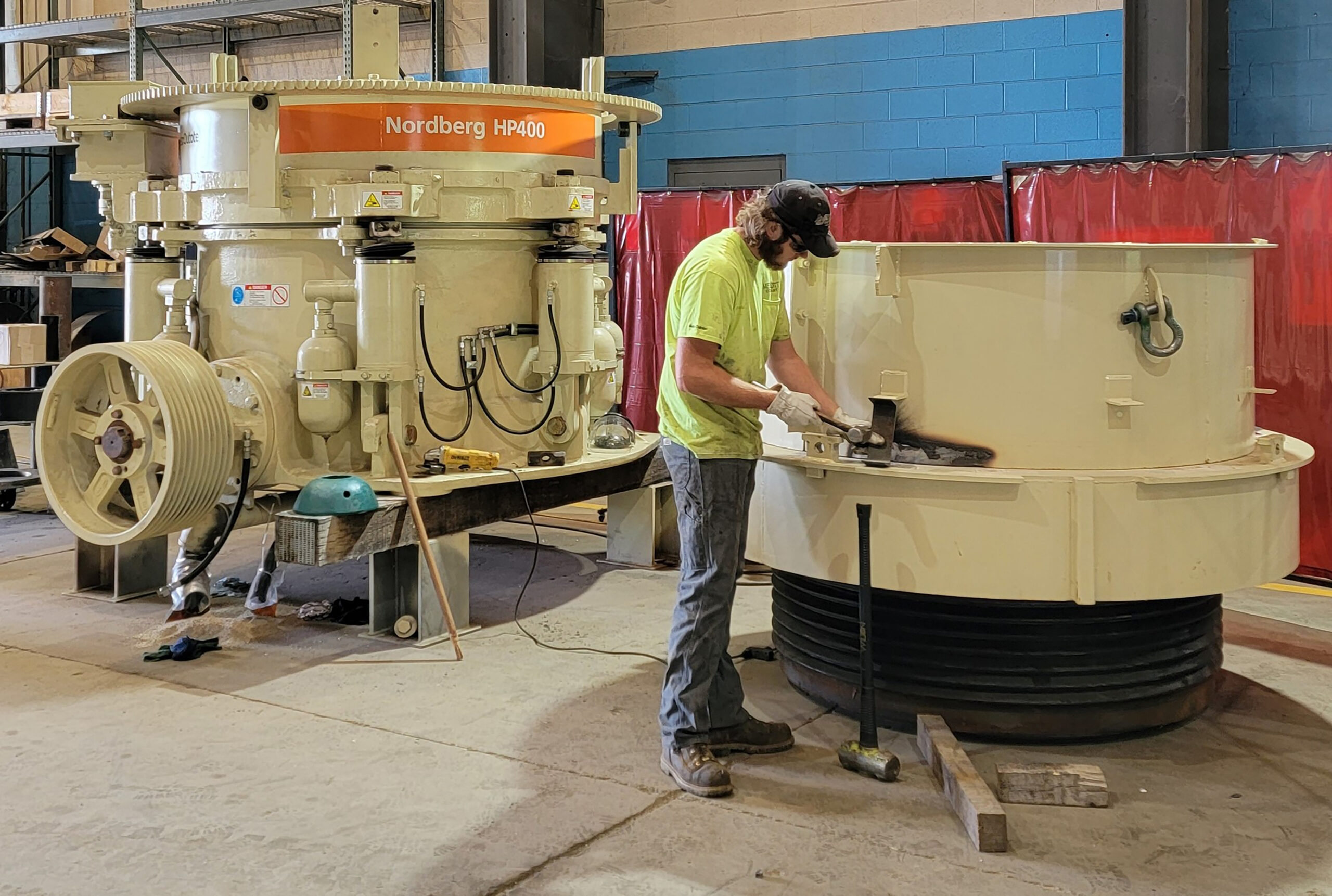
Not every equipment problem calls for a complete rebuild or a new crusher.
When an issue is isolated to a specific component or system and the rest of the machine remains in serviceable condition, a targeted repair may be the most practical solution. The first step is identifying the source and extent of the problem.
A thorough crusher inspection can help determine the condition of critical components, identify abnormal wear or damage and establish the appropriate corrective action. Depending on the findings, repairs may involve replacing worn or damaged components, machining, welding or addressing mechanical, lubrication or hydraulic issues.
Repair can be particularly attractive when the underlying equipment remains well suited to the operation’s production requirements and the problem can be corrected without a more extensive overhaul.
When Is It Time to Consider a Crusher Rebuild?
A crusher rebuild goes beyond addressing an individual problem. It typically involves a more comprehensive evaluation of the machine and the repair or replacement of multiple worn components to restore the crusher to proper operating condition.
Rebuilding can make sense when the crusher’s major structural components remain suitable for continued service but accumulated wear has begun to affect reliability or performance.
The condition of the machine must be carefully evaluated before making this decision. A professional inspection can include disassembly as needed, dimensional measurements, crack checks and examination of critical components. The results provide a clearer picture of what can be reused, what can be repaired and what should be replaced.
A rebuild may also provide an opportunity to incorporate appropriate equipment updates or improvements while the crusher is being serviced.
When Should You Consider Replacing a Crusher?
There comes a point when continuing to invest in an existing crusher may no longer be the best choice for the operation.
Replacement deserves consideration when the machine requires extensive repairs relative to its remaining useful life, when critical components are no longer economically repairable, or when parts availability makes continued ownership increasingly difficult.
However, equipment condition is only part of the equation.
An older crusher may still be mechanically repairable but no longer meet the needs of the operation. Changes in feed material, desired product size, required capacity or the overall crushing circuit can make a different crusher a better fit.
Before replacing equipment solely because of performance concerns, it is also important to determine whether the crusher itself is actually the limiting factor. Feed conditions, screening efficiency, conveyors, recirculating loads and other parts of the circuit can influence crusher performance and overall plant production.
Look Beyond the Initial Cost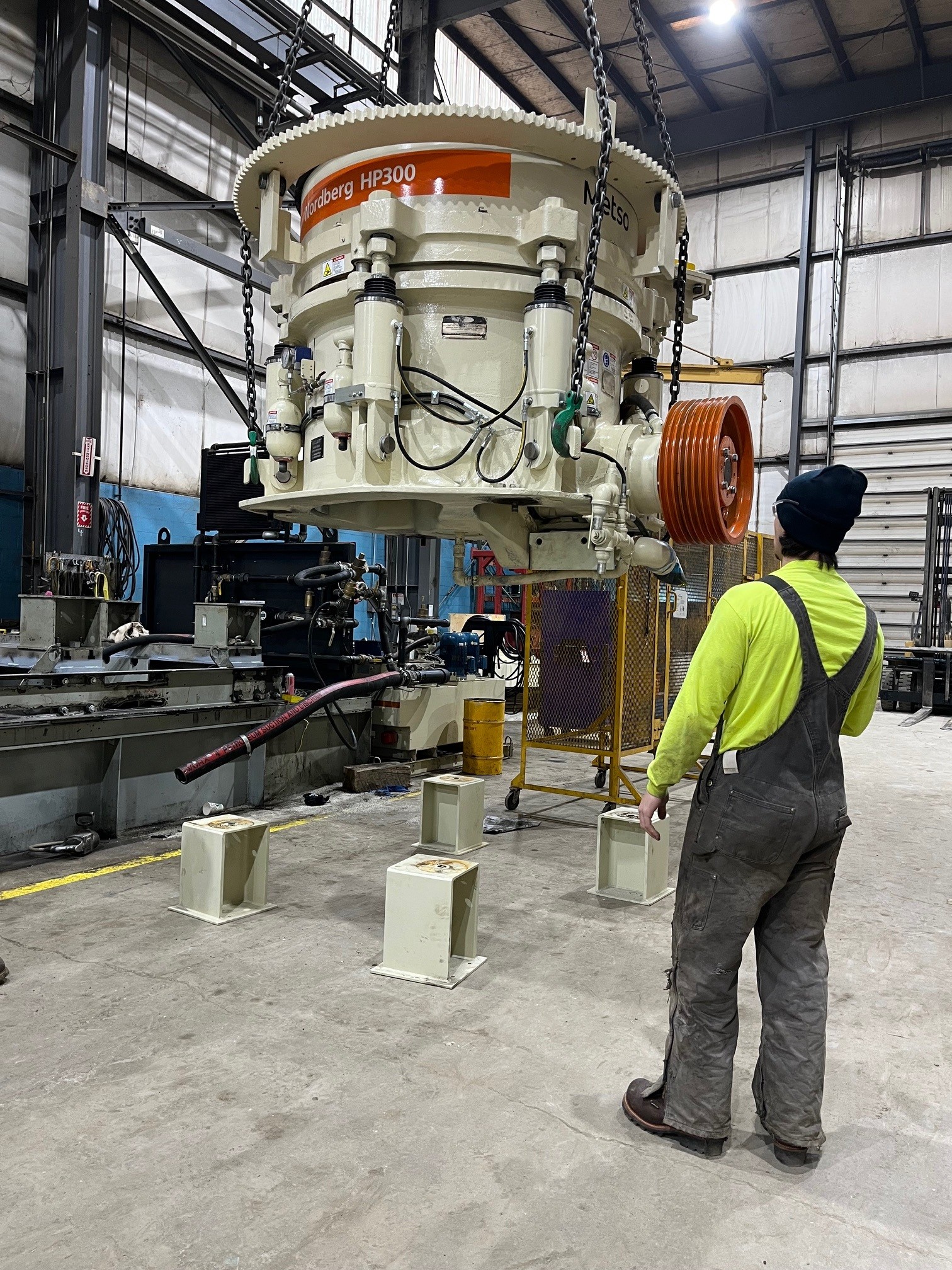
Cost is naturally a major consideration when comparing crusher repair, rebuild and replacement, but the initial quote should not be the only factor.
Aggregate producers should consider the broader impact on the operation, including:
- Expected remaining service life
- Anticipated repair and maintenance requirements
- Parts availability and lead times
- Planned and unplanned downtime
- Current and future production requirements
- Compatibility with existing plant equipment
- Long-term operating costs
For example, the lowest-cost repair may not represent the best value if recurring failures continue to interrupt production. At the same time, replacing a crusher that can be effectively repaired or rebuilt could result in unnecessary capital expense.
The goal should be to identify the option that provides the best combination of reliability, performance and long-term value for the specific operation.
Start With a Thorough Crusher Evaluation
Making the repair, rebuild, or replace decision without understanding the actual condition of the crusher can lead to unnecessary expense or continued reliability problems.
A detailed equipment evaluation provides the information needed to make that decision with greater confidence. Measurements, component condition, wear patterns and operating concerns can help establish the appropriate scope of work before significant money is committed.
This is particularly important when an operation is experiencing recurring issues. Treating the immediate symptom without identifying the underlying cause can lead to repeated repairs and additional downtime.
Get Expert Guidance From Mellott
There is no universal hour limit or age at which every crusher should automatically be repaired, rebuilt, or replaced. The right decision depends on the condition of the equipment and what the operation needs from it moving forward.
Mellott provides crusher inspection, maintenance, repair and rebuild services backed by decades of experience working with aggregate processing equipment. Our team can evaluate equipment condition, identify repair requirements, and help customers understand the options available for keeping their operations productive.
If you’re facing recurring crusher problems, planning a major repair, or deciding whether continued investment in an existing machine makes sense, contact Mellott to discuss your equipment. An informed evaluation can help you determine the right next step for your crusher and your operation.
