


At County Line Stone in Akron, NY, innovation and efficiency are key to keeping their limestone quarry operations running smoothly. Sitting on the Onondaga formation, the quarry supplies New York State DOT-certified limestone products, with a primary plant that includes a Deister feeder paired with a Nordberg jaw crusher. Their product range is diverse, from 1” minus and 2” minus to 3”–4” products, surge products ranging from 2.5” to 12”, and even gabion stone, which can be adjusted to create a 10”+ clean stone product.
Their secondary plant features three Metso HP crushers—HP500 STD, HP500 SH, and HP300 SH with various liners tailored to different product sizes, supported by three Deister screens handling scalping and finishing.
Crushing Challenges & Material Insights
Konrad Diehl, Operations Manager at County Line Stone, shares,
“We are permitted to crush limestone from the Onondaga formation, with an average chert content of about 25%. Moisture coming out of the quarry is usually less than 2%. Our surge material fed into the HP500 STD with the MX liner is typically 2.5”–12”.”
The HP500 STD with the MX liner is the first crusher on the secondary plant and handles the most crushing, processing 600–700 TPH. Before switching to MX liners, the plant used 18% manganese aftermarket liners, which typically lasted 135,000–170,000 tons depending on chert content.
Konrad explains the challenge:
“Each liner has a substantial break-in period. Because we feed oversized material, sometimes 15”+, into the HP500, our break-in period is longer than usual. During the first week, throughput can drop about 20%, and only about 60% of the liner life is spent in prime crushing conditions. We mitigate this by sending larger material to surge during break-in and end-of-life periods.”
Even with planned preventative maintenance and efficient changeouts (5–6 hours per liner), the break-in period of traditional liners created temporary throughput reductions that impacted overall plant efficiency.
Why Switch to MX Liners?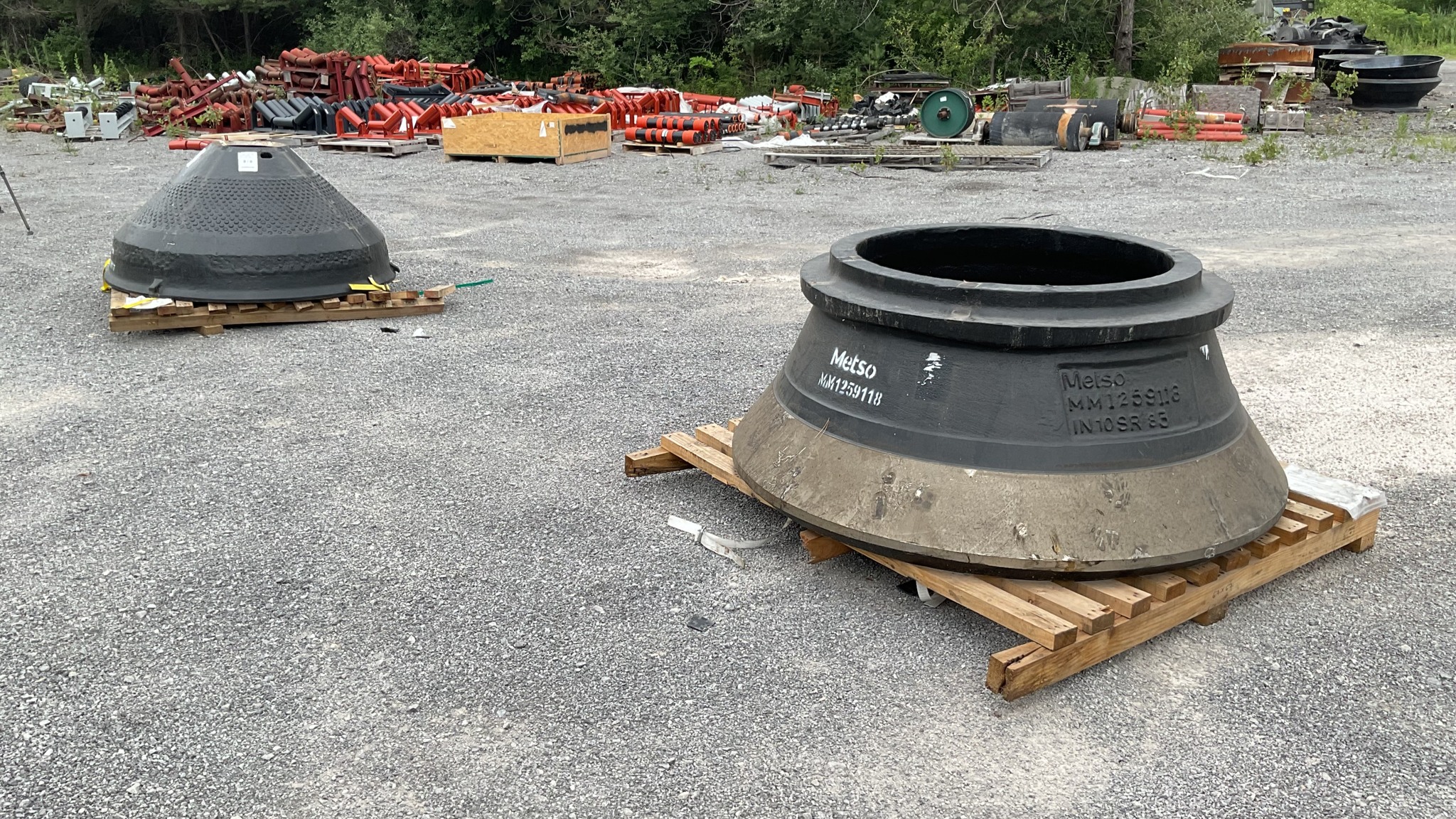
County Line Stone decided to explore MX liners for several reasons:
- Longer wear life – Increasing prime crushing time from 60% to 80% of liner life.
- Reduced downtime – Fewer liner changes mean maintenance crews can focus on other plant areas.
- Increased throughput – More consistent TPH over the liner’s lifespan.
- Lower cost per ton – Improved efficiency spreads costs over more production.
Konrad notes:
“We heard MX liners could handle our larger material more efficiently and reduce the disruptive break-in periods. Price was our only hesitation, but we wanted to see if the investment would pay off.”
Real-World Results
Using data collected from calibrated belt scales and automation systems, County Line Stone tracked liner performance meticulously. For their aftermarket STD liners:
- Average crushing days: 26.7
- Average tonnage: 147,000 per liner
- Average TPH: 616
- Cost per ton for liner wear: $0.13
When they installed the MX liner, results were remarkable:
- Crushing days: 43
- Tonnage: 262,557 (77% increase)
- Crushing hours: 409
- Average TPH: 641 (increase of 25 TPH)
- Tons per adjustment: 284 (up from 189)
“The biggest improvement was the increase in tons processed per liner and tons per adjustment,” Konrad says. “Our traditional liners averaged 147,000 tons; the MX liner processed 262,000 tons. We also had fewer adjustments per hour, which improved crusher stability and overall plant efficiency.”
Additionally, consistent gradation increased from about 60% of liner life in prime form to 80% with MX liners. Automation now allows quick adjustments in two minutes for all three crushers, improving efficiency further.
Safety & Maintenance Benefits
Beyond efficiency and throughput, MX liners also reduce maintenance exposure:
“Fewer liner changeouts mean less crane work, less prep time, and reduced risk for our team. Safety improves while plant uptime increases,” Konrad explains.
Cost Analysis
Looking at liner costs for the HP500 STD:
- Traditional aftermarket liners: $18,500/set × 7 changes/year → $168,140 total seasonal cost (~$0.17/ton including labor)
- MX liners (with tariff): $37,361/set × 4 changes/year → $171,524 total seasonal cost (~$0.17/ton)
- MX liners (without tariff): $29,889/set × 4 changes/year → $141,636 total seasonal cost (~$0.14/ton)
“With the MX liner, we also increased average TPH from 616 to 641, which spreads operating costs over more tons and further reduces cost per ton across the plant,” Konrad adds.
Looking Ahead
County Line Stone plans to continue running MX liners on the HP500 STD and is exploring MX options for other crushers, including a new C-150 jaw crusher coming in 2027.
“The MX liner has been a positive improvement. Higher throughput, longer wear life, and reduced maintenance requirements have made it a win for our operation. We plan to expand its use to other crushers as opportunities arise,” says Konrad.
County Line Stone’s experience demonstrates that investing in advanced liner technology, like MX liners, can lead to significant improvements in throughput, safety, and cost per ton, providing a measurable advantage for modern limestone operations.
